

When a well casing starts to corrode, crack, or let sand through, the well doesn’t always have to be replaced. In many cases, a properly sized liner installed inside the existing casing can restore the well’s structure, stop sand and sediment from entering, and keep good water coming for years to come. Watson Well is a licensed C-57 water well contractor serving Redding, Eureka, Chico, Mt. Shasta, and the surrounding Northern California communities. We start with a video inspection so you know exactly what’s happening down the hole, then recommend the repair that makes sense for your well and your budget.
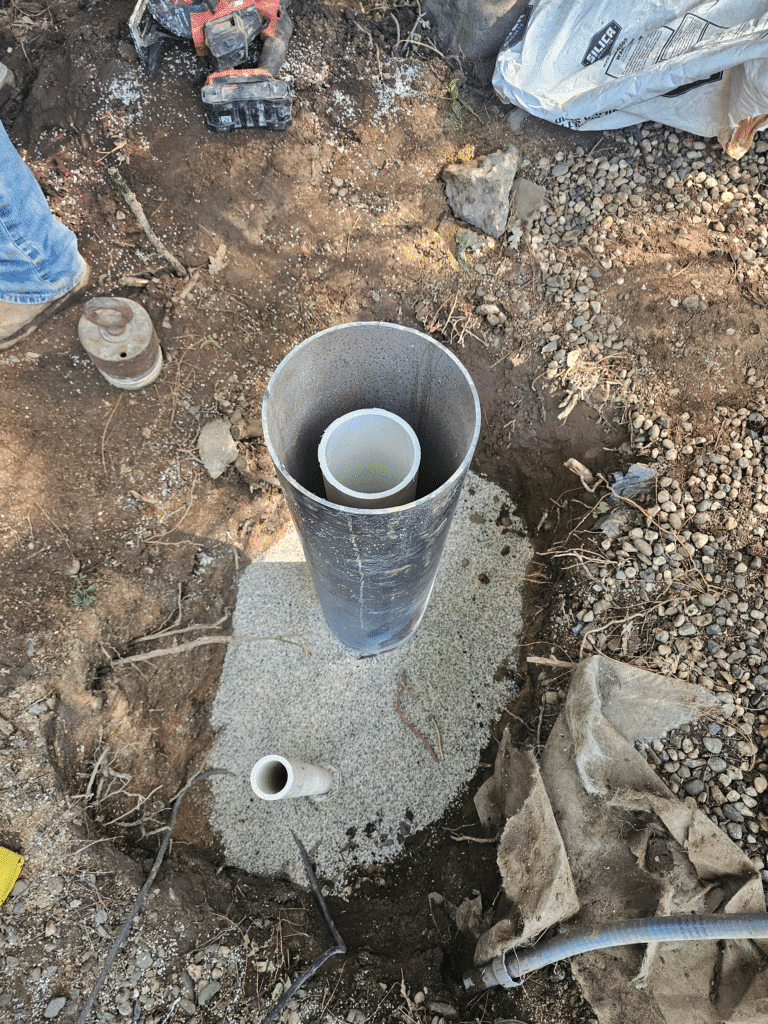
A well liner (sometimes called a casing liner or well sleeve) is a new string of pipe installed inside the original well casing. It acts as a new inner wall for the well, sealing off holes, cracks, and corroded sections in the old casing and holding back the sand, silt, and loose formation material that can pour in through damaged areas.
Liners can run the full depth of the well or cover only the damaged section. Depending on the well, the liner may be solid pipe, slotted or screened pipe through the water-bearing zone, or a combination of both. Common materials include PVC and steel, chosen based on the well’s depth, diameter, water chemistry, and what the liner needs to withstand.
Lining a well is a form of well repair. It’s different from well rehabilitation, which focuses on cleaning and restoring production from the existing casing and screen, and from drilling a new well altogether.

The casing is what holds a well open and keeps the surface separated from the groundwater below. Once it’s compromised, problems tend to build on each other. A failing casing can:
Catching casing problems early gives you more options. A well with moderate corrosion is often a good liner candidate. A well that has already collapsed may not be.

The most common reasons property owners in our service area call us about a well liner include:
These symptoms can also come from other causes, like a failing pump, a problem in the well screen, or changes in the aquifer. That’s why we confirm the cause with a video well inspection before recommending a liner.
A liner is a smart repair for the right well, but it isn’t the right answer every time. We’ll walk you through the tradeoffs honestly before you commit to anything.
A liner makes the well smaller inside. Because the liner sits inside the old casing, the usable diameter of the well shrinks. In some wells, that means the existing pump won’t fit anymore and a smaller pump is needed.
Production can change. Depending on how the liner is screened and how the aquifer behaves, a lined well may produce the same amount of water or somewhat less than it did originally. We’ll test the well after the liner goes in so you know where it stands.
It extends the well’s life rather than resetting it. A liner can add many years of service to a well that would otherwise need to be replaced, but it’s still a repair to an aging well. For some properties, especially if the well has also lost significant production, a new well is the better long-term investment.
Some wells can’t be lined. If the casing has collapsed or is badly deformed, a liner may not pass through it. In that case, we’ll talk through replacement options and, if needed, proper well destruction of the old well.
If your well is a good candidate, lining it is usually far less disruptive and less costly than drilling a new well.
Installing a liner means working inside the well itself, and California law restricts that work to specialty-licensed professionals.
C-57 licensing is the legal standard. Under the California Contractors State License Board, work inside a water well, including repair and modification of the casing, falls under the C-57 Water Well Drilling classification. A general (B) or plumbing license doesn’t qualify. Using an unlicensed contractor puts the well, your water supply, and any permit at risk. Learn more about licensing.
Permits are often required. Counties in our service area regulate well repair and modification. Shasta County, for example, requires a permit for well repairs, and Humboldt County’s well permit covers both repair and modification work. Requirements vary by county and by the scope of the job, and a licensed contractor knows what your county requires and handles that paperwork as part of the job.
The work has to protect the groundwater. California Well Standards (DWR Bulletins 74-81 and 74-90) set the requirements for how wells are built and sealed to keep surface water and contaminants out of the aquifer. A liner that isn’t sized, set, and sealed correctly can leave the same pathways open that it was supposed to close.
The right liner depends on the right diagnosis. Choosing the liner material, diameter, length, and where it should be solid or screened takes knowledge of well construction and the local formation. Getting it wrong can mean sand still entering the well or production dropping more than it needed to.
Not every company setting liners is licensed to do it. In our service area, some pump and service companies install well liners without a C-57 license. We’ve been called out to wells that were lined improperly and are still producing sand and gravel, leaving the owner with a damaged pump, unhappy results, and a repair that has to be redone. Before anyone works inside your well, ask to see their C-57 license and check it with the CSLB.
Watson Well holds an active C-57 license (CSLB #947596) and is a member of the California Groundwater Association and the National Groundwater Association. Every liner job starts with a clear diagnosis and ends with documentation of the work.
We run a downhole camera to see the condition of the casing, locate damage, and measure the well's depth and diameter. We also review any existing well records.
We explain what we found, whether a liner is the right fix, and what type we recommend. If your county requires a permit, we file it on your behalf.
The pump, drop pipe, and wiring are pulled from the well.
The casing is cleaned as needed, and accumulated sand or sediment is removed from the bottom of the well so the liner can be set to the proper depth.
The liner is lowered into the well and set in place, with solid sections and screened sections positioned to match the well's water-bearing zones.
The space between the liner and the old casing is filled or sealed as the job requires, keeping the liner stable and blocking sand and shallow water from getting around it.
We reinstall the pump (or a properly sized replacement), disinfect the well, and test production so you know how your well is performing after the repair.
Watson Well provides licensed well liner installation and well repair throughout our Northern California service area, including Redding, Eureka, Chico, Mt. Shasta, and the surrounding communities in Shasta, Humboldt, Butte, and Siskiyou counties. If you’re not sure whether your property falls in our service area, give us a call. We’re happy to check.
A well liner is a new pipe installed inside your existing well casing. It seals off holes and corrosion in the old casing, keeps sand and sediment out of the well, and can extend the life of a well that would otherwise need to be replaced.
Sand in your water, repeated pump failures, rusty or cloudy water, or a pump that’s difficult to pull can all point to a damaged casing. The only way to know for sure is a video inspection of the well, which shows exactly where and how badly the casing is damaged.
It can. A liner reduces the inside diameter of the well, and depending on how it’s screened and how your aquifer behaves, production may stay about the same or drop somewhat. We test the well after installation so you know how it’s performing.
For a well that’s a good candidate, lining is usually less costly and less disruptive than drilling a new well. Cost depends on the well’s depth, diameter, the liner material, and whether the pump needs to be replaced. We’ll give you a clear estimate after we assess the well.
Sometimes. Because the liner narrows the well, some pumps will still fit and others will need to be replaced with a smaller model. We’ll tell you up front whether your pump can go back in.
In many cases, yes. Counties in our area regulate well repair and modification work, and requirements depend on your county and the scope of the job. We handle any required permitting as part of the project.
No. If the casing has collapsed or is badly bent, the liner may not fit through it. A well that has also lost most of its production may be better served by a new well. We’ll assess your well and give you an honest recommendation.
That depends on the liner material, your water chemistry, and how the well is used. A properly installed liner can add many years of service to an aging well. We’ll talk through what to expect for your specific well.
If you’re seeing sand in your water, dealing with repeated pump problems, or suspect your well casing is failing, don’t wait for it to get worse. Contact Watson Well for a video inspection and assessment, and we’ll walk you through your options, the process, and the cost for your specific well.
Complete the form below to request an appointment from our team. We will contact you shortly.